
Martin Luther is one of the key figures in church history. He was used by God to bring reformation to the church, and one he is one of my personal heroes. I’ve studied Luther on and off throughout my adult life.
On October 31, 1517, he nailed 95 theses on the doors of the All Saints’ Church in Wittenberg, Germany. Although these disputations were intended only for academic discussion, his actions effectively sparked what would be the firestorm of The Protestant Reformation.
Ten years later, he experienced the most difficult year of his life. He became dizzy in the middle of a sermon on April 22 of that year, forcing him to stop preaching. He was afraid for his life. On July 6, while he ate dinner, he experienced buzzing in his ear and lay down, again convinced he was at the end of his life. Debilitating discouragement set in. In addition, heart problems and severe intestinal complications worsened his outlook.
Luther wrote, “I spent more than a week in death and hell. My entire body was in pain, and I still tremble. Completely abandoned by Christ, I labored under the vacillations and storms of desperation and blasphemy against God.”
Additionally, the black plague had spread into Wittenberg. Many people left the area, fearing for their lives. Luther and his wife, Katy, remained to care for the sick and dying. Although she was pregnant with their second child, their house became a makeshift hospital where he watched many friends die. Without warning Luther’s one-year-old son, Hans, became sick. With death surrounding him on every side, Luther was driven to seek refuge in God as never before. Psalm 46 became the strength of his soul.
Psalm 46
God is our refuge and strength, a very present help in trouble. Therefore we will not fear though the earth gives way, though the mountains be moved into the heart of the sea, though its waters roar and foam, though the mountains tremble at its swelling.
Selah
There is a river whose streams make glad the city of God, the holy habitation of the Most High. God is in the midst of her; she shall not be moved; God will help her when morning dawns. The nations rage, the kingdoms totter; he utters his voice, the earth melts. The Lord of hosts is with us; the God of Jacob is our fortress.
Selah
Come, behold the works of the Lord, how he has brought desolations on the earth. He makes wars cease to the end of the earth; he breaks the bow and shatters the spear; he burns the chariots with fire. “Be still, and know that I am God. I will be exalted among the nations, I will be exalted in the earth!” The Lord of hosts is with us; the God of Jacob is our fortress.
Selah
The Holy Bible: English Standard Version (Wheaton, IL: Crossway Bibles, 2016).
Psalm 46 is a song written in three verses. That little word, Selah, at the end of each verse is a musical cue to pause. It encourages us to stop and ponder the truth in the verse. It means something like, “Consider this and let it really sink in,” if you will.
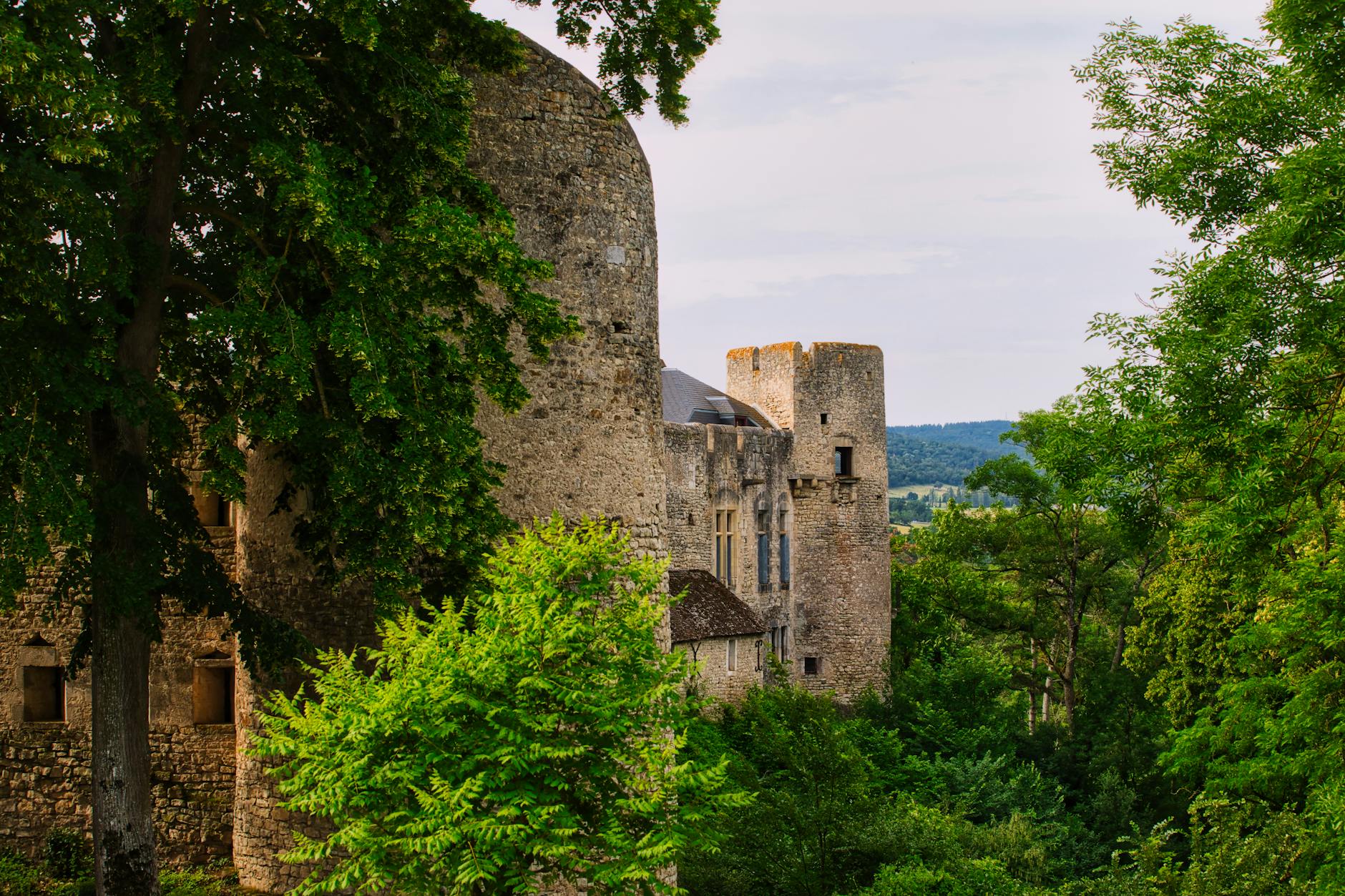
As a result of his agony and the relief he found in this scripture, Luther elaborated on the truths of Psalm 46, writing the hymn for which he is most famous; “A Mighty Fortress Is Our God.” It is one of the most moving declarations of God as our all-sufficient refuge within any calamity life throws our way and has become the enduring symbol of the Reformation.
A Mighty Fortress is Our God
A mighty fortress is our God,
A bulwark never failing;
Our helper He amid the flood
Of mortal ills prevailing.
For still our ancient foe
Doth seek to work us woe—
His craft and pow’r are great,
And armed with cruel hate,
On earth is not his equal.
That word above all earthly pow’rs,
No thanks to him abideth;
The Spirit and the gifts are ours
Thru Him who with us sideth.
Let goods and kindred go,
This mortal life also—
The body they may kill;
God’s truth abideth still
His kingdom is forever.

Here is the point. If a hero like Martin Luther can find himself desperately afraid, we “normal” people can experience fear, as well. Fear is part of the human experience in a fallen world. People fear insignificance, death, financial ruin, failure, and other issues. Fortunately, most of what we fear never comes to fruition. We tend to fear much more than we ever face. I have seen people fear minor things and I’ve seen others bravely face serious issues, even death, with confidence. What is the difference? I believe the difference is realizing that God is a mighty fortress and an impenetrable stronghold for those who know Him.
Luther realized this, leaned on scripture, Psalm 46 particularly, and came through the fire. As a result, we have a mighty hymn through which we can declare the protection, presence, and prevalence of our mighty God.
We live in some strange times. Money may be tight, opinions may polarize, and mercy may seem scarce, but God is still God. He is always on His throne. Your personal situation may be wonderful, or it may seem terrible. I pray it is wonderful, but friend, no matter how desperate, frustrated, or fearful you may be now or in the future, I pray you find faith greater than fear. I hope you exercise faith over fear. I pray you know God as your fortress, refuge, and strength. God bless you.
Be sure to check out Kevin’s book

 kevingarrett.org